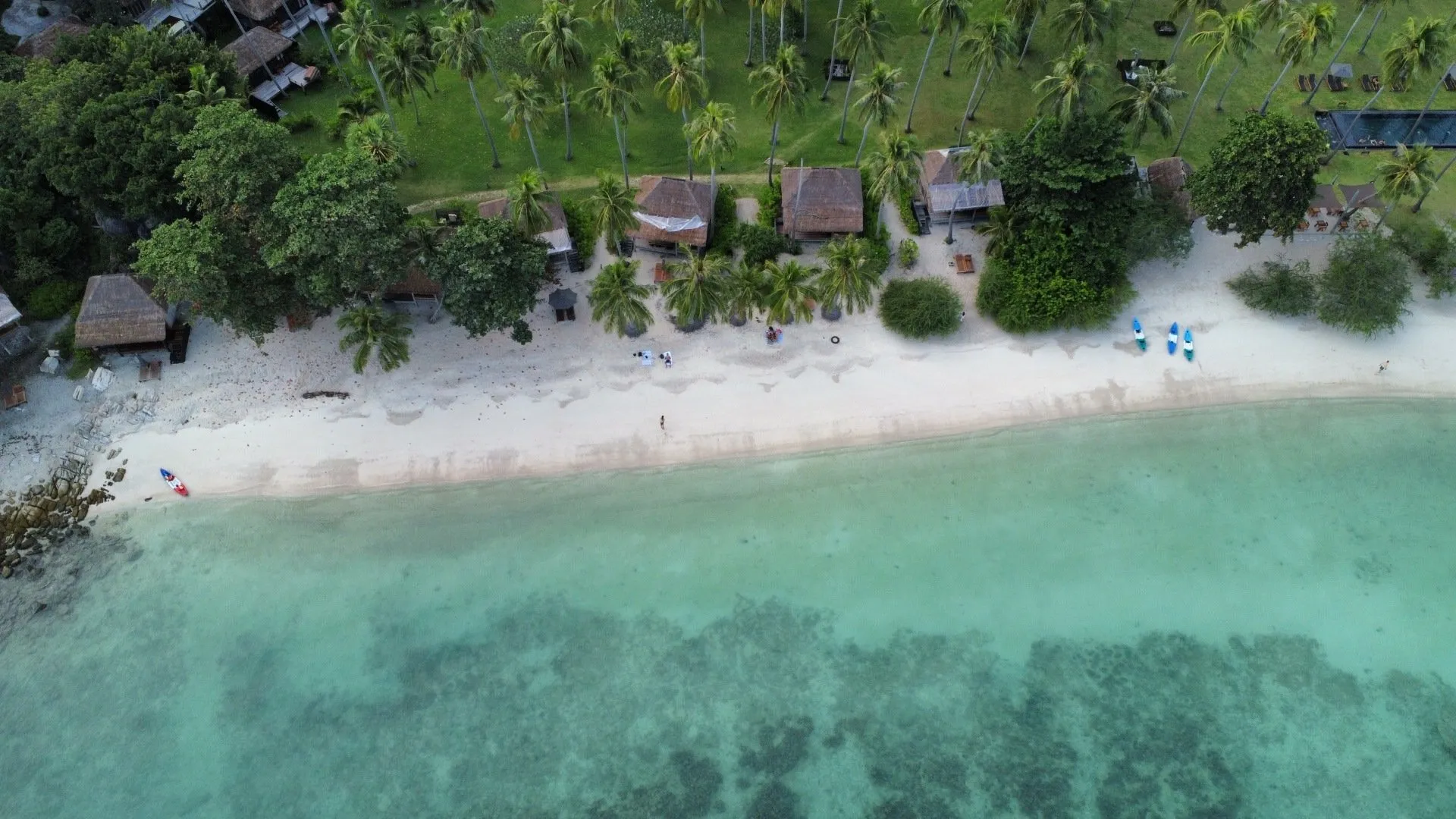
Thailand generally allows drone flights, but requires a double registration with two authorities before you're allowed to take off at all. Sorting this out before your trip saves a lot of hassle at the airport and during checks on the ground.
Registration is required for every drone weighing 250 grams or more at takeoff, regardless of whether you're flying privately or commercially. Only truly tiny toy drones under 250 g are exempt – all common travel drones (DJI Mini, Air, Mavic etc.) must be registered.
First, register your drone with the NBTC (National Broadcasting and Telecommunications Commission), since any drone with a camera counts as a radio device. This is done online via the NBTC registration portal, you'll need your passport, drone serial number and a recent photo. Processing usually takes a few days, after which you'll get a confirmation you should keep with you.
Next comes registration with the CAAT (Civil Aviation Authority of Thailand) via the CAAT registration portal (UAS Portal). Here you also upload proof of your NBTC registration as well as proof of liability insurance (required in Thailand, at least 1 million THB of coverage is recommended). Once approved, you'll receive a digital CAAT certificate that you must be able to show during checks.
Carry your passport, NBTC confirmation and CAAT certificate with you, digitally or printed. Check on-site whether your flying area falls in a no-fly zone (airports, military facilities, government buildings, many temple grounds and national parks). Fly only in daylight, within line of sight, and no higher than 90 meters above ground, unless a separate permit allows more.
In national parks, drone flights are often banned outright or require a separate permit from the park administration – it's best to ask directly on-site or by email in advance. On popular islands like Koh Phi Phi or Koh Samui, additional local restrictions sometimes apply, and many resorts and beach sections prohibit flying out of respect for other guests. Near temples, be mindful of religious ceremonies even where no official no-fly zone is marked.
If you use your drone for paid work, monetized YouTube content or similar, you'll need a separate commercial permit from the CAAT. For personal holiday footage, the standard registration is enough.
Flying without registration risks fines of up to 100,000 THB, imprisonment of up to 5 years, or both, plus confiscation of the drone. Enforcement varies by region, but airports, national parks and larger crowds are commonly checked.